Formless Oedon

Contact information:

  • 4 posts
  • 2 comments
Joined 3 months ago
Cake day: April 11th, 2026
[2026-06-21] Proxima Report

Welcome back to Weekly Dose of Space! This week had another eight launches taking place, with half occurring on the same day. News of the week had an orbital refueling contract being awarded and Relativity Space teaming up with NASA. As always, we’ll also look ahead to what the worldwide launch schedule might look like next week.

June 15th - Kinetica-1 with eight CGSTL-made satellites

CAS Space flew its Kinetica-1 launch vehicle from the Jiuquan Satellite Launch Center to place eight satellites into sun-synchronous orbit. Eight remote sensing satellites were revealed to be onboard, all made by Changguang Satellite Technology Co Ltd, with a few notable ones being:

  • Caiyun Optical-01, dedicated to Yunnan province’s natural resources.
  • Antie-03, to be used for ‘smart’ management of Fujian province’s tea plants.
  • ‘Lichuan Red’, for supporting the city of Lichuan’s tea industry,
  • Cultural Relics-01, tasked with monitoring national cultural heritage sites.

CAS Space's Kinetica-1 Y14 launch vehicle lifting off from the Jiuquan Satellite Launch Center on June 15th 2026. ©CAS Space

CAS Space’s Kinetica-1 Y14 launch vehicle lifting off from the Jiuquan Satellite Launch Center on June 15th 2026. ©CAS Space

June 15th - Falcon 9 with Starlink Group 17-54

Flying from Space Launch Complex 4E, in California, a Falcon 9 placed twenty-four Starlink satellites into low Earth orbit. Supporting this launch was booster B1093, launching for the fourteenth time and touching down on the droneship ‘Of Course I Still Love You’.

Falcon 9 launching from Space Launch Complex 4E for the Starlink Group 17-54 mission on June 15th 2026. ©SpaceX

Falcon 9 launching from Space Launch Complex 4E for the Starlink Group 17-54 mission on June 15th 2026. ©SpaceX

June 16th - Long March 3B/E with Shijian-31

For its return-to-flight mission, a Long March 3B/E lofted the Shijian-31 space environment exploration satellite into a Molniya orbit from the Xichang Satellite Launch Center. The return mission also tested a few unspecified technical upgrades installed during the five months of downtime.

A Long March 3B/E launch vehicle departing from the Xichang Satellite Launch Center on June 16th 2026. ©China Aerospace Science and Technology Corporation

A Long March 3B/E launch vehicle departing from the Xichang Satellite Launch Center on June 16th 2026. ©China Aerospace Science and Technology Corporation

June 17th - Long March 12 with GuoWang Group 22

Departing from the Wenchang Commercial Space Launch Site, a Long March 12 delivered nine GuoWang space-based connectivity satellites into low Earth orbit. This launch has brought the constellation to 177 deployed satellites.

The Long March 12 Y7 vehicle lifting off from the Wenchang Commercial Space Launch Site on June 17th 2026. ©China Aerospace Science and Technology Corporation

The Long March 12 Y7 vehicle lifting off from the Wenchang Commercial Space Launch Site on June 17th 2026. ©China Aerospace Science and Technology Corporation

June 17th - Kuaizhou-11 with CentiSpace Group-05

ExPace’s Kuaizhou-11 blasted off from the Jiuquan Satellite Launch Center and headed for low Earth orbit to deliver the Future Navigation’s CentiSpace Group-05, its third deployment. Those satellites are set to provide positing services once further groups are added.

ExPace's Kuaizhou-11 Y13 vehicle blasting off from the Jiuquan Satellite Launch Center on June 17th 2026. ©ExPace

ExPace’s Kuaizhou-11 Y13 vehicle blasting off from the Jiuquan Satellite Launch Center on June 17th 2026. ©ExPace

June 17th - Falcon 9 with three BlueBird satellites

SpaceX’s Falcon 9 headed into low Earth orbit from Space Launch Complex 40, in Florida, to deliver three BlueBird satellites, numbered 8 through 10, on behalf of AST SpaceMobile, to slowly build its 248-spacecraft constellation. Booster B1077 supported this launch for its twenty-ninth flight, landing downrange on the drone ship ‘A Shortfall Of Gravitas’.

Falcon 9 lifting off from Space Launch Complex 40 to deliver three BlueBird satellites on June 17th 2026. ©SpaceX

Falcon 9 lifting off from Space Launch Complex 40 to deliver three BlueBird satellites on June 17th 2026. ©SpaceX

June 17th - Ariane 6 for LE-03

Europe’s Ariane 6 flew with four upgraded solid rocket boosters from the Guiana Space Center, in South America, to place thirty-six Leo satellites into low Earth orbit for Amazon’s space-based internet constellation. This launch brought Amazon’s total satellite count up to 367.

Up close: Ariane 6 rocket liftoff 🚀
This is what the most powerful rocket launch in European history looks – and sounds – like from just 141 metres from the launch pad, 17 June 2026.https://t.co/PmZJQ1vOqj pic.twitter.com/RxDegWGouF

— ESA Space Transport (@ESA_transport) June 19, 2026

June 19th - Falcon 9 for NROL-179

A Falcon 9 flew out of Space Launch Complex 4E to place a group of U.S. military satellites into Earth orbit that will be operated by the National Reconnaissance Office. Supporting their launch was booster B1103 for its third mission, touching down at Landing Zone 4 next to its launch pad.

A composite photo of Falcon 9 lifting off from Space Launch Complex 4E and touching down at Landing Zone 4 on June 19th 2026. ©SpaceX

A composite photo of Falcon 9 lifting off from Space Launch Complex 4E and touching down at Landing Zone 4 on June 19th 2026. ©SpaceX

In Other Space News

Relativity Space Teams up with NASA for Mars Science Mission

On June 17th, Relativity Space and NASA announced a next generation Mars orbiter, with the Aeolus suit of scientific tech onboard.

Aeolus is currently being developed by NASA Ames in California, while the rest of the orbiter will be built by Relativity Space. The future Martian explorer has the goal of studying the red planets weather while also mapping ice and other mineral deposits.

Onboard, the orbiter has its own compute system, able to do in-situ data analysis to not stress the Deep Space Network too much.

Quantum Space wins Pentagon Orbital Refueling Contract

Maryland based startup, Quantum Space has won a contract from the Department of Defense to refuel satellites in Geostationary Orbit. Using the companies “Ranger” spacecraft platform, Quantum Space intends on delivering the spacecraft by 2028.

While not much is known about the contract amount, what we do know is that the tech demo will fly two different fueling interfaces. One was built by Orbit Fab and the other, Northrop Grumman.

Following a slip from this year, Quantum Space plans on launching its first Ranger spacecraft, dubbed “Ranger Prime” sometime in Q2, 2027.

What to Expect Next Week

June 21st - Falcon 9 with Starlink Group 17-28

SpaceX plans to add another group of Starlink satellites to low Earth orbit via a launch from Space Launch Complex 4E.

June 23rd - Long March 7A with a to-be-announced payload

A Long March 7A is preparing to fly towards geostationary space from the Wenchang Space Launch Site, carrying a satellite that is yet to be named.

June 23rd - Falcon 9 to demonstrate ‘Starfall’

SpaceX is aiming to demonstrate its new uncrewed Starfall capsules with the release of a single one from a Falcon 9, flying from Space Launch Complex 40, possibly co-manifested with other spacecraft.

June 25th - Falcon 9 with Starlink Group 17-45

Another group of Starlink satellites are set to be placed into low Earth orbit by a Falcon 9 flying from Space Launch Complex 4E.

June 27th - Pegasus for Swift’s Boost Mission

Northrop Grumman’s final Pegasus air-launched rocket is being prepared to deliver Katalyst Space Technologies’ robotic servicing spacecraft, which should head to NASA’s Neil Gehrels Swift Observatory to raise its orbit, extending its life in orbit.

[2026-06-22] China in Space

[

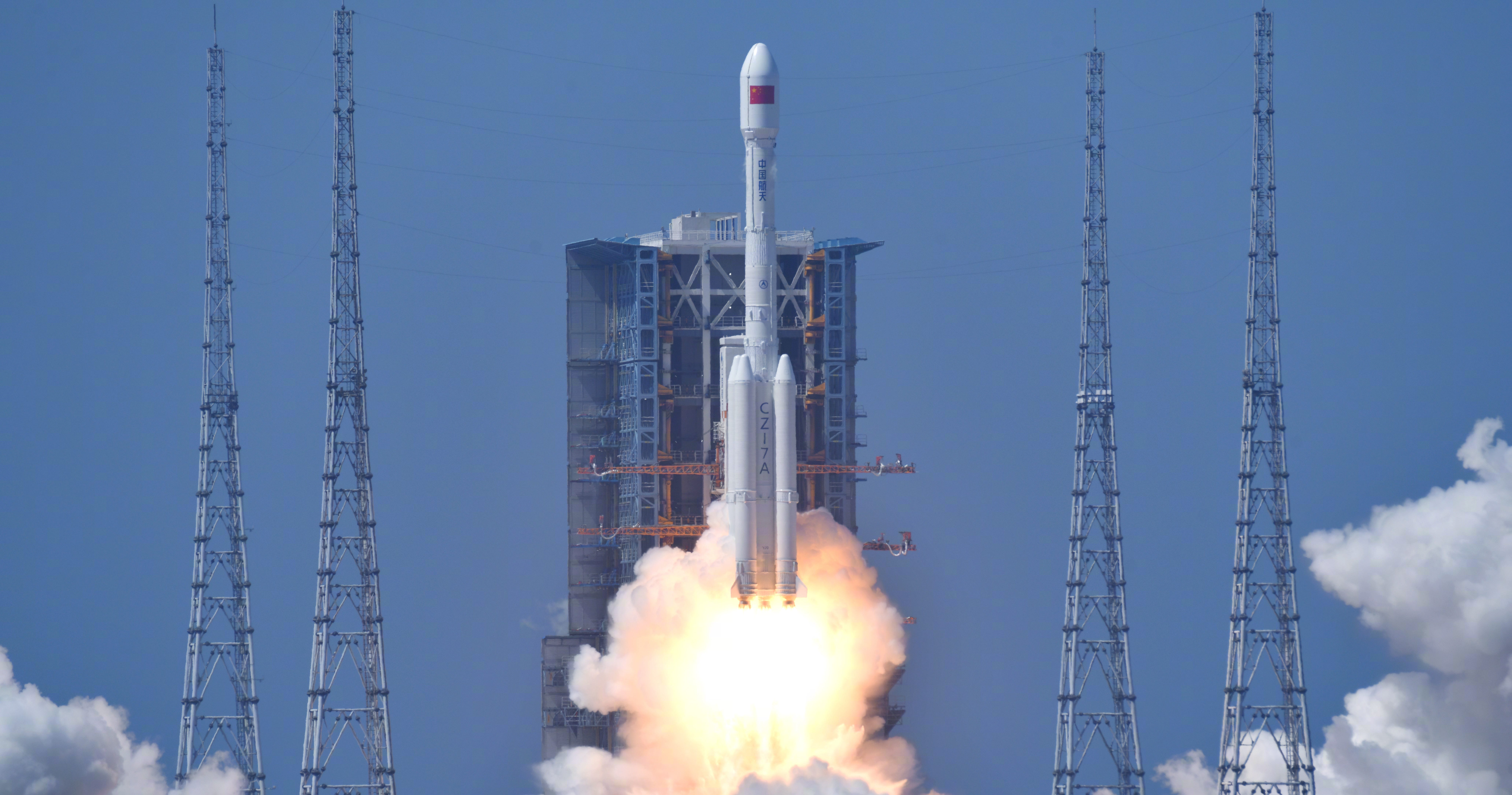
The Long March 7A Y20 vehicle lifting off from the Wenchang Space Launch Site on June 23rd 2026.

](https://substackcdn.com/image/fetch/$s_!WCPS!,f_auto,q_auto:good,fl_progressive:steep/https%3A%2F%2Fsubstack-post-media.s3.amazonaws.com%2Fpublic%2Fimages%2F59cf38d9-970c-4104-a6f2-2b1210cf9b5d_8256x4340.jpeg)

The Long March 7A Y20 vehicle lifting off from the Wenchang Space Launch Site on June 23rd 2026. | Image: China Aerospace Science and Technology Corporation

The Wenchang Space Launch Site’s Launch Complex 201 had a Long March 7A liftoff at 10:10 am China Standard Time (02:10 am Universal Coordinated Time) on June 23rd, heading for geostationary space with a single spacecraft.

That spacecraft was the Shanghai Academy of Spaceflight Technology-developed TJSW-26A (通信技术试验卫星二十六号A星), known as Communication Technology Experimental Satellite-26A in English. As with the rest of the TJSW fleet deployed in recent years, the spacecraft is set to demonstrate multi-band, high-throughput communications technologies for radio, television, and data transmission. Unlike others with its name, being designated ‘26A’ implies that at least a ‘26B’ will be launched to work in tandem.

TJSW-26A is also the third satellite of its series to be sent towards geostationary space this year, after May’s TJSW-24 and June’s larger TJSW-25, all three of which have left Earth in the last month. In the last eighteen months, the TJSW fleet has grown significantly, with nine deployments throughout 2025.

[

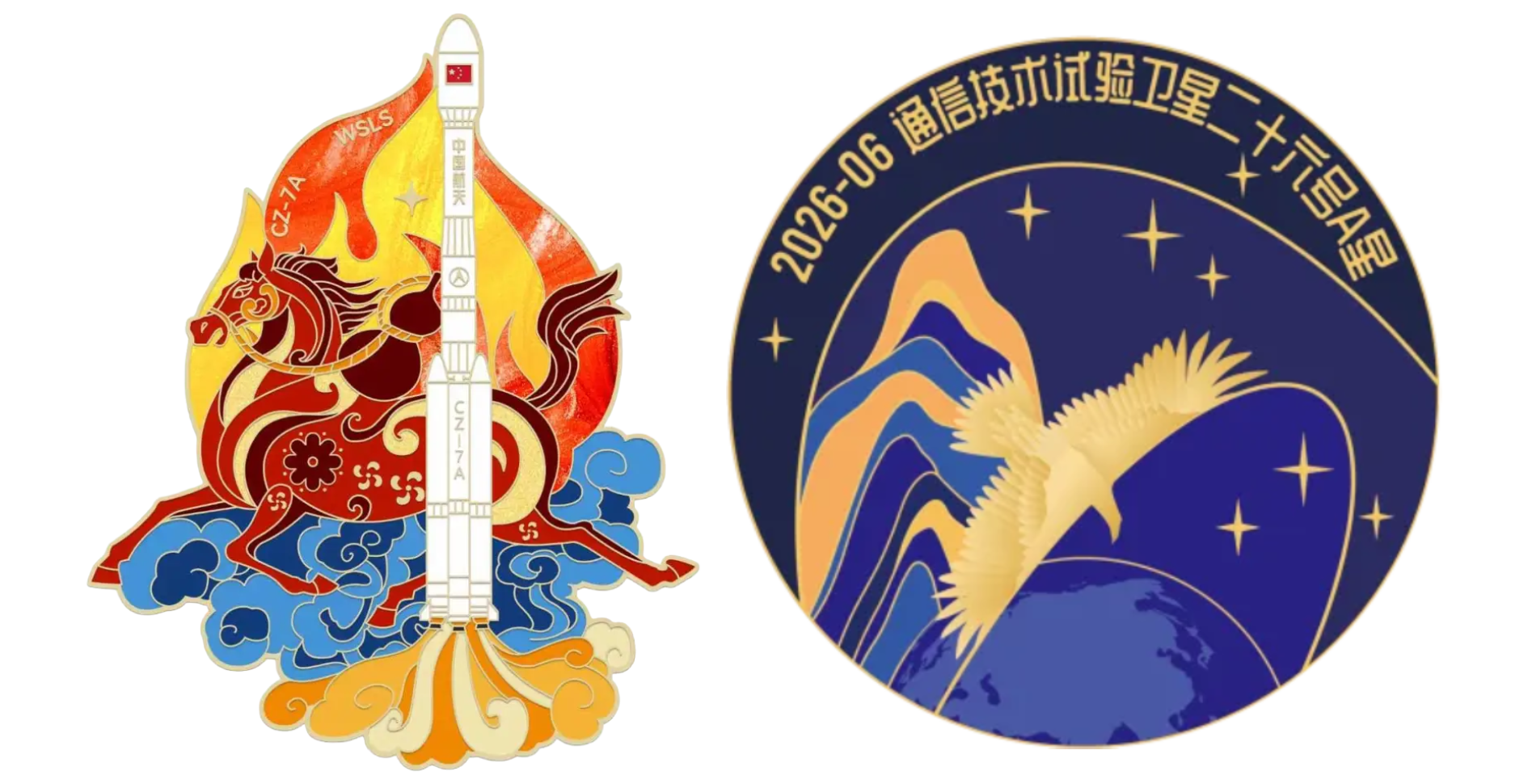
The China Academy of Launch Vehicle Technology’s patch for the Long March 7A Y20 launch mision (left) and the Shanghai Academy of Spaceflight Technology’s patch for TJSW-26A (right).

](https://substackcdn.com/image/fetch/$s_!HTON!,f_auto,q_auto:good,fl_progressive:steep/https%3A%2F%2Fsubstack-post-media.s3.amazonaws.com%2Fpublic%2Fimages%2F9e36b407-b7c5-46db-8f56-06484b59c357_1890x970.png)

The China Academy of Launch Vehicle Technology’s patch for the Long March 7A Y20 launch mision (left) and the Shanghai Academy of Spaceflight Technology’s patch for TJSW-26A (right). | Image: China Aerospace Science and Technology Corporation

Last year the Long March 7 series conducted six launch missions, and this year the China Academy of Launch Vehicle Technology is hoping to perform twelve missions. As of today, three launches have taken place. As of the previous flight, hardware and facilities for testing, preparing, and stacking Long March 7 series vehicles allowing for two missions to be prepared in parallel, which reportedly allows for pre-flight work to occur in nineteen days instead of thirty-five.

Today’s mission was the 16th launch of a Long March 7A vehicle, the 27th launch of the Long March 7 series, and the 653rd launch of the Long March launch vehicle series. This was also the 44th launch from China in 2026.

Liftoff video via 我们的太空 on WeChat.

This section is for those less familiar with China’s Long March series of launch vehicles.

The Long March 7A is the new-generation workhorse for beyond low Earth orbit missions, and was developed by the China Academy of Launch Vehicle Technology. This vehicle utilizes a three-and-a-half-stage design and is fuelled by rocket-grade kerosene and liquid oxygen in its boosters, first, and second stages long with liquid hydrogen and liquid oxygen in the third-stage.

The payload capacity of the launch vehicle is currently as follows:

  • 8,000+ kilograms to a medium Earth transfer orbit

  • 7,000 kilograms to geostationary transfer orbit

  • 5,500 kilograms to a 700-kilometer sun-synchronous orbit

  • 5,000 kilograms to a trans-lunar trajectory

[

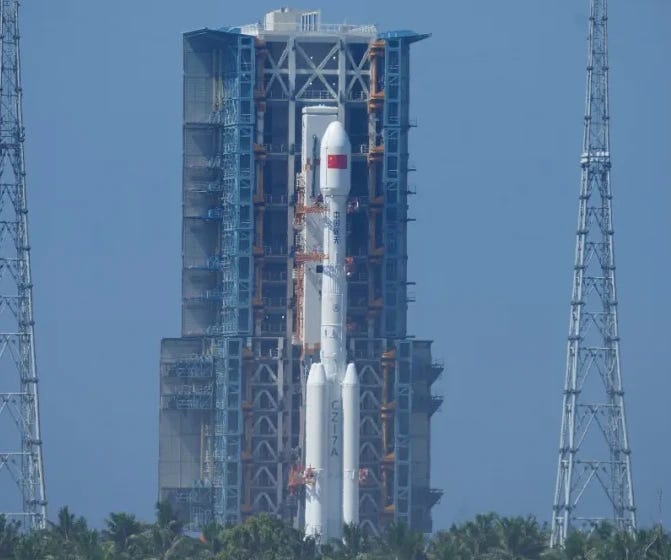
The Long March 7A Y20 vehicle stood at Launch Complex 201 ahead of its mission on June 23rd 2026.

](https://substackcdn.com/image/fetch/$s_!-m4J!,f_auto,q_auto:good,fl_progressive:steep/https%3A%2F%2Fsubstack-post-media.s3.amazonaws.com%2Fpublic%2Fimages%2F3c033e15-2d76-4f8f-bbb3-3d294714e903_671x560.webp)

The Long March 7A Y20 vehicle stood at Launch Complex 201 ahead of its mission on June 23rd 2026. | Image: China Aerospace Science and Technology Corporation

The Long March 7A’s first stage is equipped with two YF-100 engines that produce 245 tons of thrust using rocket-grade kerosene and liquid oxygen, complemented by four boosters, each with a YF-100 engine generating 122 tons of thrust, resulting in a combined thrust of approximately 733 tons. The second stage is powered by four YF-115 engines, which together generate 72 tons of thrust using the same fuel combination. The third stage of the Long March 7A features two YF-75 engines, providing 17 tons of thrust by burning liquid hydrogen and liquid oxygen.

On the launchpad, the Long March 7A stands at 60.13 meters tall and weighs 573,000 kilograms when fully fuelled. The first and second-stage have a diameter of 3.35 meters, the four boosters are 2.25 meters in diameter, and the third-stage has a diameter of 3 meters, while the fairing has a diameter of 4.2 meters.

So far the Long March 7A has only flown from the Wenchang Space Launch Site, on the east coast of Hainan province.

[

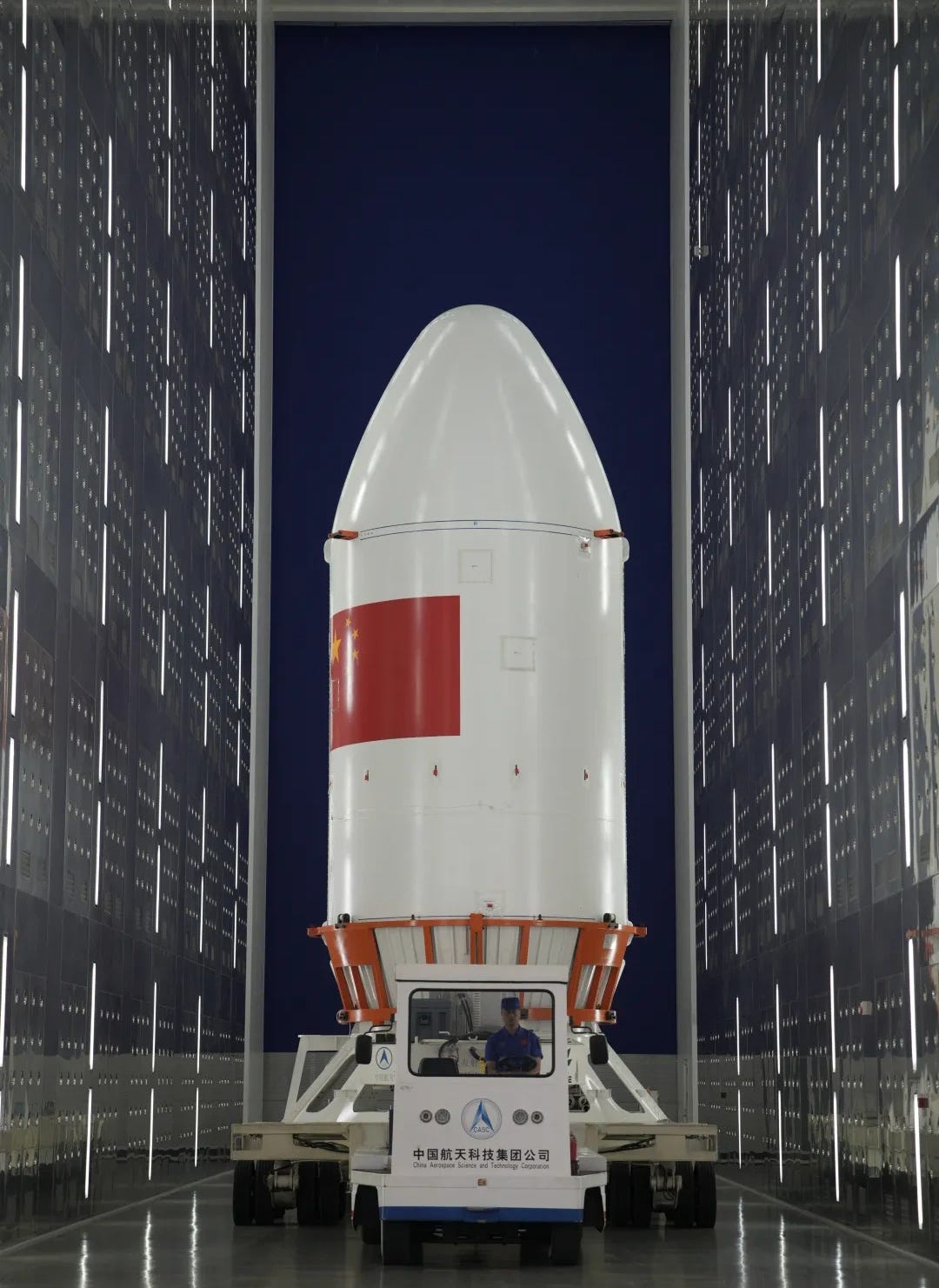
The Long March 7A’s fairing heading from its cleanroom towards a vehicle assembly bay for stacking with the rest of the launch vehicle.

](https://substackcdn.com/image/fetch/$s_!OTa9!,f_auto,q_auto:good,fl_progressive:steep/https%3A%2F%2Fsubstack-post-media.s3.amazonaws.com%2Fpublic%2Fimages%2Ff05d98f5-ff9c-45a5-a566-ded4621a2527_1080x1481.webp)

The Long March 7A’s fairing heading from its cleanroom towards a vehicle assembly bay for stacking with the rest of the launch vehicle. | Image: China Aerospace Science and Technology Corporation

Thanks for reading China in Space! This post is public so feel free to share it.

Share

[2026-06-11] China in Space

[

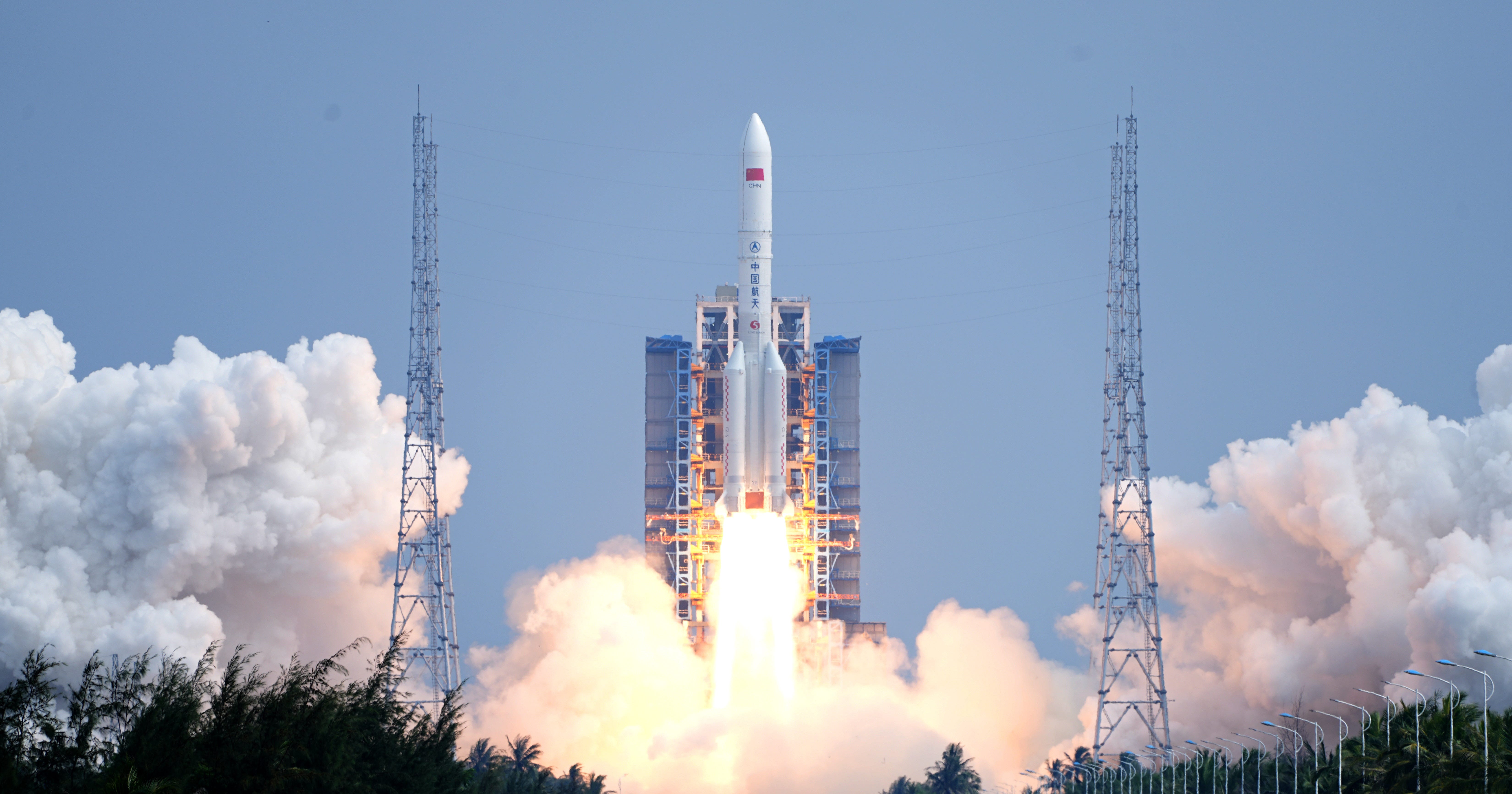
The Long March 5 Y11 vehicle lifting off from the Wenchang Space Launch Site on June 11th 2026.

](https://substackcdn.com/image/fetch/$s_!dWH8!,f_auto,q_auto:good,fl_progressive:steep/https%3A%2F%2Fsubstack-post-media.s3.amazonaws.com%2Fpublic%2Fimages%2F8ae03d7f-63e6-488b-bddf-01df205722ea_6600x3468.jpeg)

The Long March 5 Y11 vehicle lifting off from the Wenchang Space Launch Site on June 11th 2026. | Image: China Aerospace Science and Technology Corporation

Departing at 15:30 pm China Standard Time (07:30 am Universal Coordinated Time) on June 11th from Launch Complex 101 at the Wenchang Space Launch Site, a Long March 5 flew towards geostationary space carrying a single satellite inside its sizable fairing.

Heading into orbit via the launch vehicle was the China Academy of Space Technology built TJSW-25 (通信技术试验卫星二十五号) spacecraft, known as Communication Technology Experimental Satellite-25 in English. Just like the many other satellites of its fleet, it is tasked with demonstrating multi-band, high-throughput communications technologies for radio, television, and data transmission.

TJSW-25 is the second of its line to launch this year, a few weeks after May’s TJSW-24 also lifted off from Wenchang. Both spacecraft are part of a significant expansion of the communications technology demonstration fleet, as nine TJSW spacecraft were deployed in 2025.

[

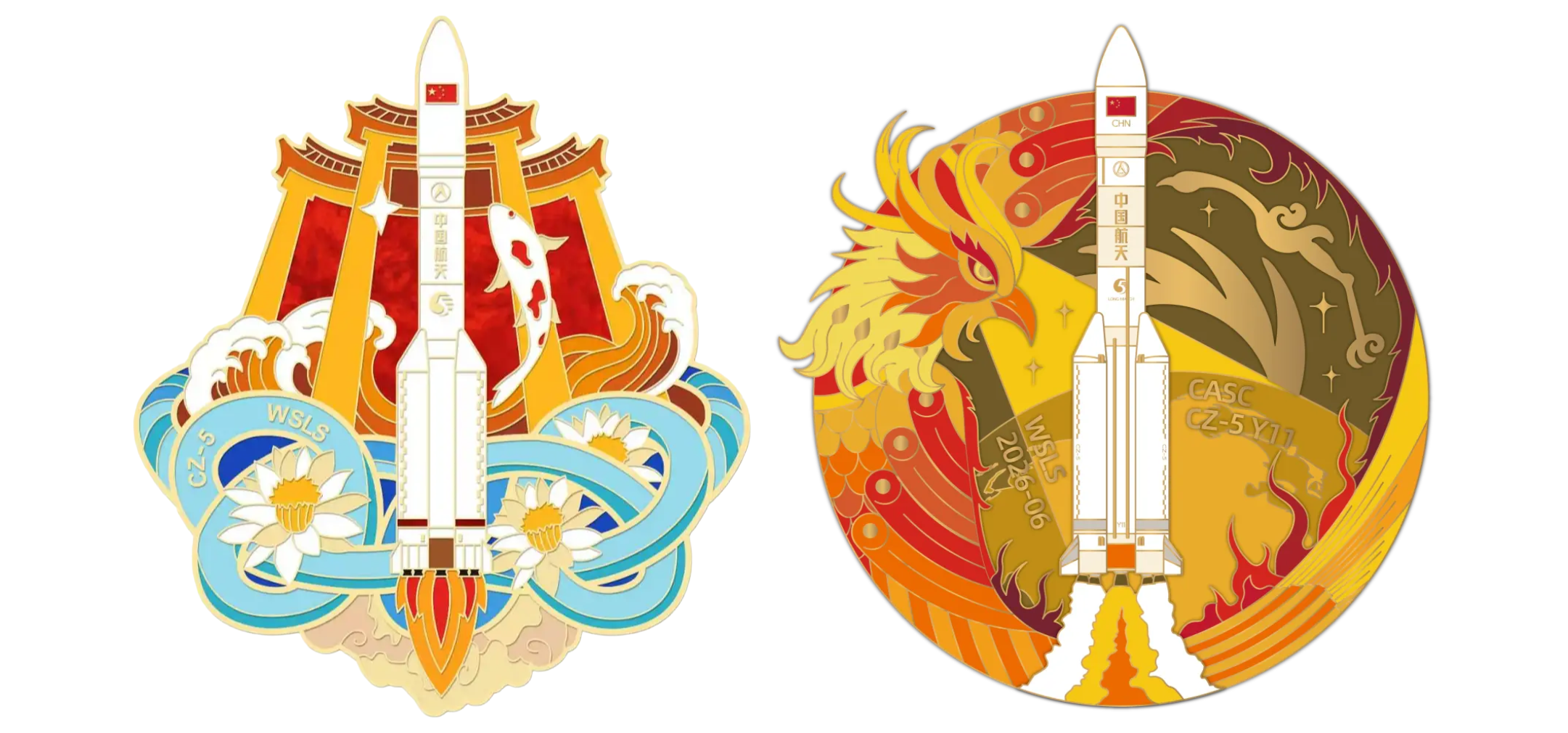
Patches for the Long March 5 Y11 launch mission from the China Academy of Launch Vehicle Technology (left) and the Shanghai Academy of Spaceflight Technology (right).

](https://substackcdn.com/image/fetch/$s_!U-xw!,f_auto,q_auto:good,fl_progressive:steep/https%3A%2F%2Fsubstack-post-media.s3.amazonaws.com%2Fpublic%2Fimages%2Fe5e21413-4f99-4f56-af98-23e959457776_2161x1010.png)

Patches for the Long March 5 Y11 launch mission from the China Academy of Launch Vehicle Technology (left) and the Shanghai Academy of Spaceflight Technology (right). | Image: China Aerospace Science and Technology Corporation

Speaking on improvements to the Long March 5’s pre-flight preparation work, the China Academy of Launch Vehicle Technology shared that testing time on the launch pad has been shortened from six days to four, while manufacturer of the four boosters, the Shanghai Academy of Spaceflight Technology, mentioned overall optimizations in handling and storing each of the stages. Those and further improvements will be needed to hit a goal of up to ten missions per year.

Additionally, the launch vehicle’s 18.5-meter-long fairing was in use for its fifth time to date, allowing larger satellites to be carried into space. The longer fairing has been used to secure the TJSW-23 satellite in December 2025, the TJSW-20 spacecraft in October 2025, and the TJSW-11 satellite in February 2024. It was first used for Yaogan-41 in December 2023.

Today’s launch was the 11th mission for the Long March 5, the 18th launch for the Long March 5 series, and the 650th launch of the Long March launch vehicle series. This was also the 39th launch from China in 2026.

Liftoff video via 我们的太空 on WeChat and ThatSpaceDogeGuy on Twitter.

Launch livestream via ThatSpaceDogeGuy on YouTube.

This section is for those less familiar with China’s Long March series of launch vehicles.

The Long March 5 is China’s largest and most capable launch vehicle currently in service, and was developed by the China Academy of Launch Vehicle Technology, with the Shanghai Academy of Spaceflight Technology providing the boosters. The two-and-a-half-stage launch vehicle is fuelled with liquid hydrogen and liquid oxygen in its first and second stages, along with rocket-grade kerosene and liquid oxygen in four boosters.

The payload capacity of the launch vehicle is currently as follows:

  • 15,000 kilograms to a 700-kilometer sun-synchronous orbit

  • 14,000 kilograms to a geostationary transfer orbit

  • 13,000 kilograms to medium Earth orbit

  • 9,400 kilograms to a trans-lunar trajectory

  • 6,700 kilograms to a 2,000-kilometer sun-synchronous orbit

  • 6,000 kilograms to a trans-Martian trajectory

  • 5,100 kilograms to geostationary orbit

[

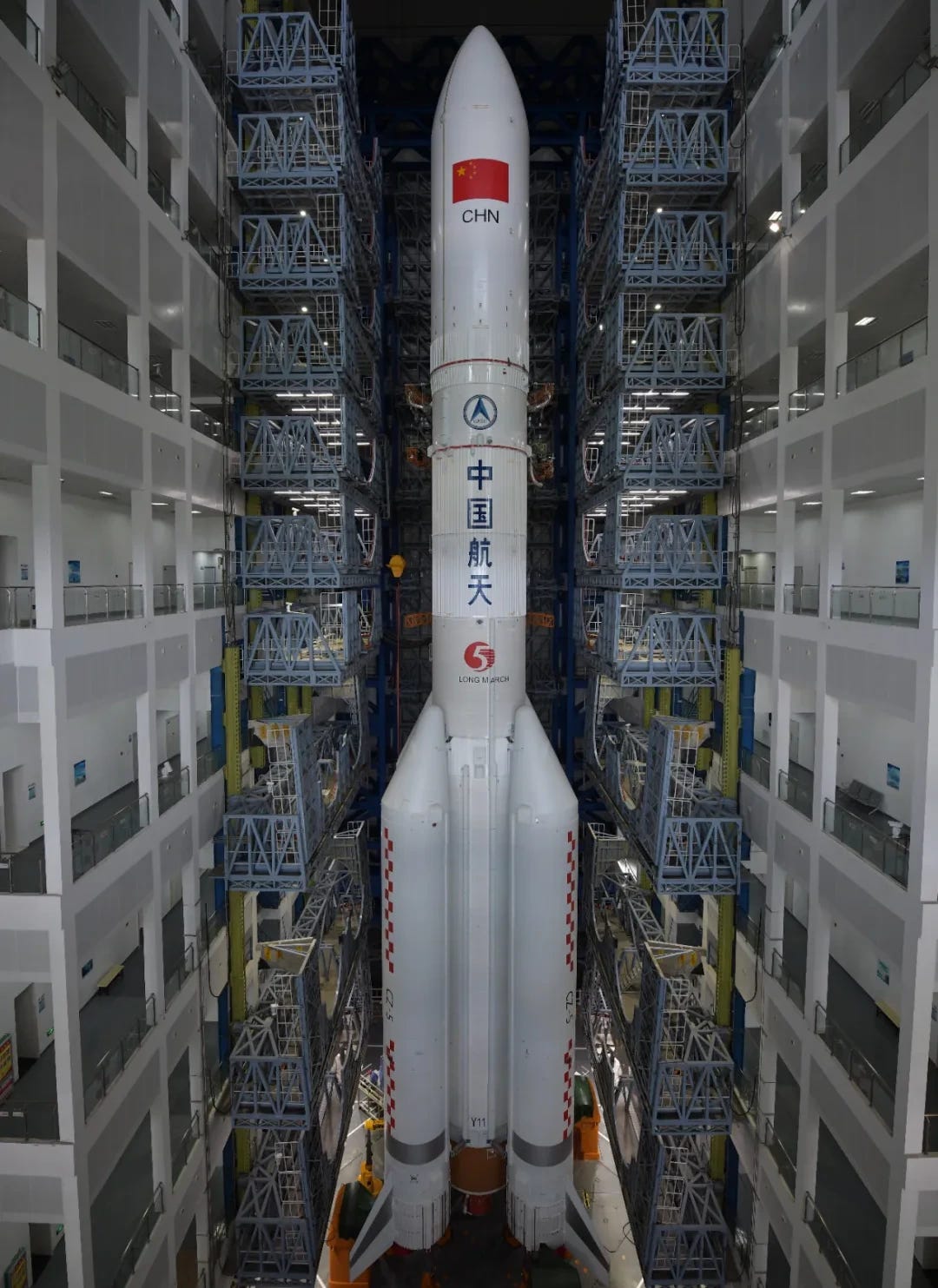
The Long March 5 Y11 vehicle inside of its vehicle assembly building in June 2026.

](https://substackcdn.com/image/fetch/$s_!hYzz!,f_auto,q_auto:good,fl_progressive:steep/https%3A%2F%2Fsubstack-post-media.s3.amazonaws.com%2Fpublic%2Fimages%2Ff537c770-b3a7-4e53-8797-c3550a8121b8_1080x1483.webp)

The Long March 5 Y11 vehicle inside of its vehicle assembly building in June 2026. | Image: China Aerospace Science and Technology Corporation

The Long March 5’s first-stage is powered by two YF-77 engines, which produce 143 tons of thrust using liquid hydrogen and liquid oxygen. To assist with liftoff, the rocket is equipped with four side boosters, each powered by two YF-100 engines that generate 245 tons of thrust using rocket-grade kerosene and liquid oxygen, providing a combined booster thrust of 979 tons. Together, the first-stage and boosters deliver a total thrust of 1,122 tons. The second stage features two YF-75D engines, generating 18 tons of thrust with liquid hydrogen and liquid oxygen.

On the launchpad, the Long March 5 stands up to 63.2 meters tall, with the longer of its two fairing options, and weighs around 851,800 kilograms fully fuelled. The first and second stages have a diameter of 5 meters, while the four boosters have a diameter of 3.35 meters, and the fairing has a diameter of 5.2 meters.

So far, the Long March 5 has only flown from the Wenchang Space Launch Site, on the east coast of Hainan province.

[

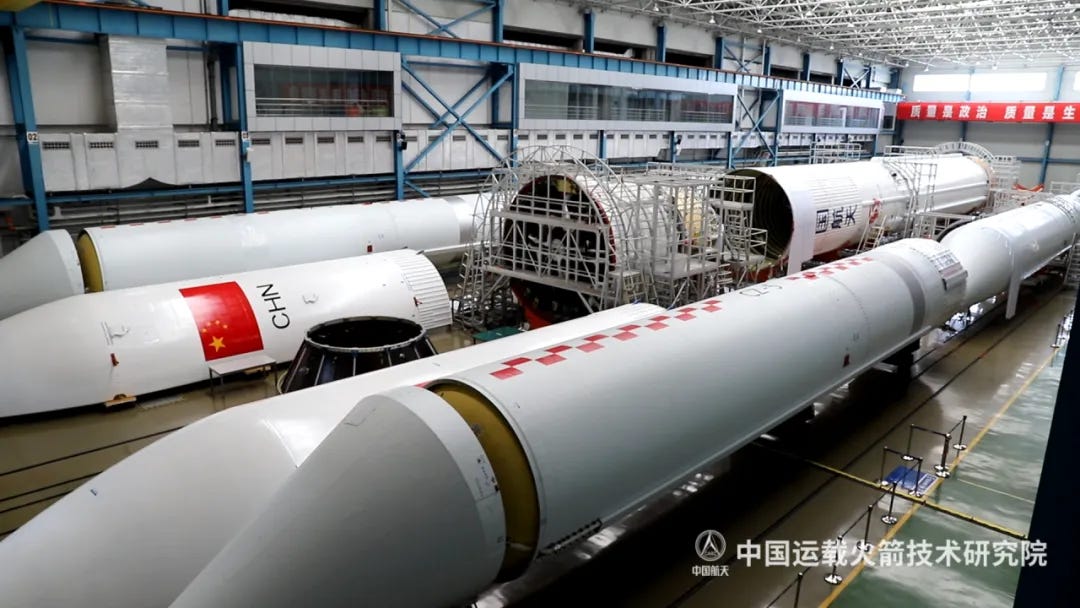
The Long March 5 Y11 vehicle’s boosters, first-stage, second-stage, and fairing prepared ahead of integration at the Wenchang Space Launch Site.

](https://substackcdn.com/image/fetch/$s_!bEC_!,f_auto,q_auto:good,fl_progressive:steep/https%3A%2F%2Fsubstack-post-media.s3.amazonaws.com%2Fpublic%2Fimages%2Fcf2b8e5d-fc88-4cf3-abeb-06f93f148509_1080x608.webp)

The Long March 5 Y11 vehicle’s boosters, first-stage, second-stage, and fairing prepared ahead of integration at the Wenchang Space Launch Site. | Image: China Academy of Launch Vehicle Technology / China Aerospace Science and Technology Corporation.

Thanks for reading China in Space! This post is public so feel free to share it.

Share