

5 months
Whatever Ubuntu 22.04 LTS shipped. I know we have many tools to micromanage energy in Linux, and I’ve used them in the past, but I think it’s fairer to compare Windows vs Ubuntu out-of-the-box, without tweaks.
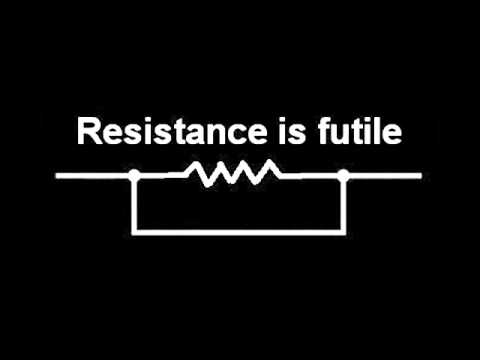
Futility is resistant
Whatever Ubuntu 22.04 LTS shipped. I know we have many tools to micromanage energy in Linux, and I’ve used them in the past, but I think it’s fairer to compare Windows vs Ubuntu out-of-the-box, without tweaks.
I haven’t done recent comparisons, maybe it has gotten better these days. I use Ubuntu LTS, so I’ll have a good opportunity for before/after benchmarking this April.
Fingerprint reader: that thing looks at me every day, obscenely suggesting I boot up Windows instead of Linux so I can stroke it gently and login conveniently.
Oh, also battery life. Windows always has managed to extract more uptime from a single charge in my laptop.

I’d guess the former, given it’s tiny compared to normal droppers, but you can never be sure these days.
This sample is a multi-platform ‘polyglot’ binary acting as a dropper and potentially a browser-based exploit. It functions as a Windows PE (with no standard imports, suggesting custom shellcode or manual API resolution), a Linux shell script, and an HTML/JavaScript file. The Linux component contains a command (‘tail -c+4294 $0 | lzma -dc > /tmp/a’) that extracts and executes a hidden payload from its own body. The embedded JavaScript is obfuscated and uses ‘eval’ to execute dynamically generated code. This structure is typical of sophisticated malware or cross-platform exploit delivery kits.
Maybe not that obscure, but Joe Celko’s Nested Set Model gave me exactly what I needed when I learned of it: fast queries on seldom-changing hierarchical database records.
Updates are heavy, but the reads are incredibly light.
This month in Plasma would still be great.

Yet they never explicitly state you’re allowed to make convenient assumptions. If the bulb was out of hand’s reach the problem would be unsolvable.
Assuming the electrician that wired the switches is in the room would be even a more out-of-the-box solution.
The biggest flaw is that it assumes you’ll add conditions you’re not explicitly told are allowed. Many, many problems in school would be trivial if changing the terms beyond what’s stated was allowed.
Whatever your place defines as a standard. I’ve seen ugly code in C, JavaScript, Java, etc., that uses them all over the place because they’re not mandatory.
If you don’t have consistent indenting, your code looks like copy/paste from several sources; but if you do have consistent indenting, then the indenting of Python is a non-issue.
I seriously doubt your quality is maintained when an LLM writes most of your code, unless a human audits every line and understands what and why it is doing it.
If you break the tasks small enough that you can do this each step, it is no longer writing a full application, it’s writing small snippets, and you’re code-pairing with it.
Software engineering is a mindset, a way of doing something while thinking forward (and I don’t mean just scalability), at least if you want it done with quality. Today you can’t vibe code but proofs of concept, prototypes that are in no way ready for production.
I don’t see current LLMs overcoming this soon. It appears that they’ve reached their limits without achieving general AI, which is what truly would obsolete programmers, and humans in general.
Not possible, neighbor implemented Negative Trust.
Real programmers will write in a way that user’s resources are not being wasted because you need a full browser, a JS runtime, and DOM juggling, to show even the simplest application.
It’s not rare for simple JS applications to consume over half a gigabyte of RAM on startup, and way more CPU than their native counterparts. That this was normalized and even defended is stupid.
Kububtu was also rough around the edges even until 22.04 LTS, but 24.04 LTS finally delivered a stable, far more customizable desktop than regular Ubuntu.
I’m eager to try 26.04 LTS next year.
Comments and full-length names make the source way more accessible.
If they accepted the job, absolutely yes. ignorantia juris non excusat.
If everyone else is is wrong, it might be that he’s the one who is wrong.
Actually, I read his post and he’s definitely wrong. Having coded in plaint text editors without syntax highlighting, I know the candy store look really aids locating needles on this haystack. He’s proposing making more needles hay-colored so the ones he thinks are more important become the focus.
It’s just his personal taste, if he loves visual fatigue, he should enjoy it without criticizing others.

I’ve been happy with Calibre Web and downloading to the official reader apps, but I’m open to try new things.
What strikes me as odd is why starting a Java software in this day and age. Java in the server is the COBOL of the 2000s, mostly used for legacy software.
How dare you assume their gender? They are now referred to as theyists.
Let’s Encrypt is a trusted, established alternative, it could replace Microsoft for long-lived software certificates.
Or tarnish its name associating it with malware and bad actors, who knows?